“Better and Bad”

Result from the rest of the world.

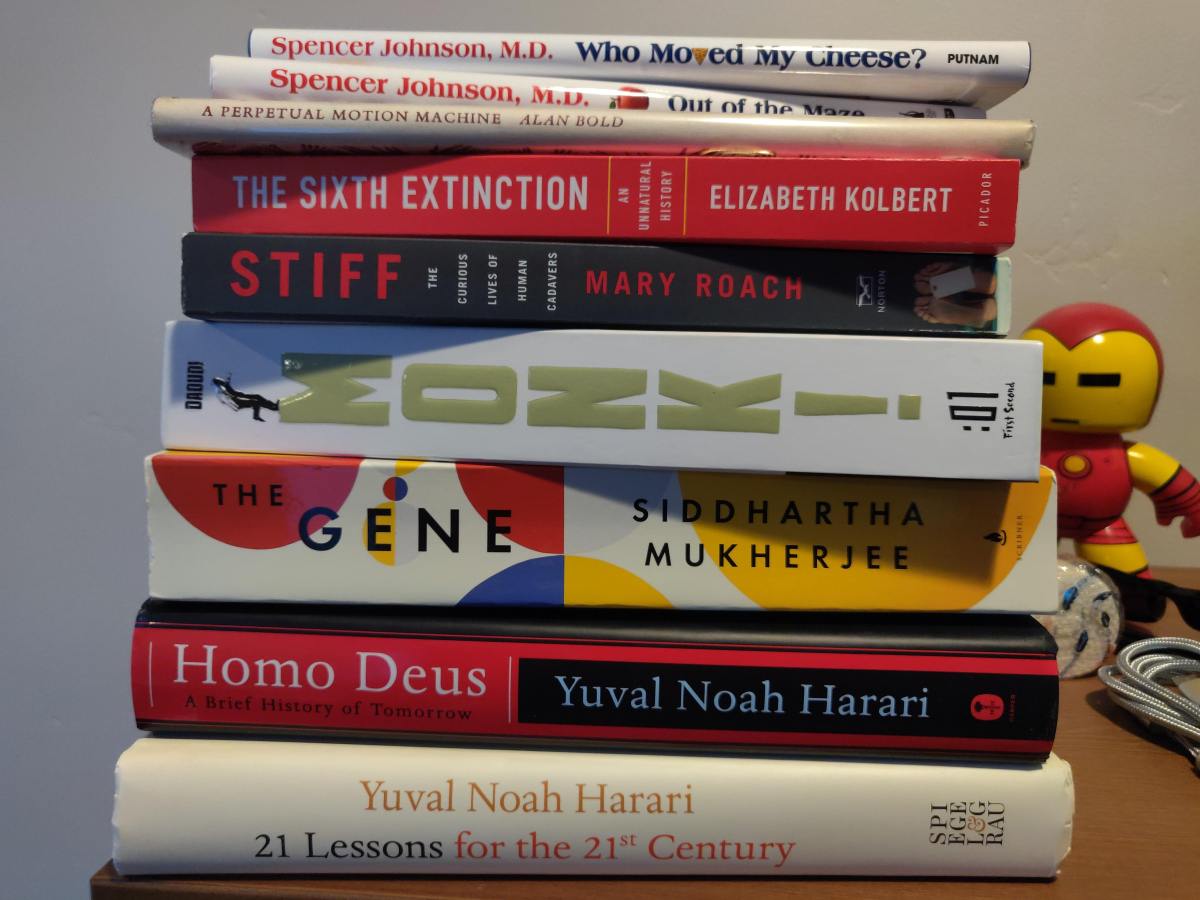
I’m on a new book now titled Factfullness with the subtitle “Ten Reasons We’re Wrong About the World–and Why Things Are Better Than You Think.” One of the main points of the book is that we (especially people who live in relative wealth [defined as >$32 per day]) have a tendency to see the world worse than it is. He bases this on years of surveying various groups including professionals in international relations (read the book if you want more details). This is not to say that we should stop worrying about the state of the world or that we should stop trying to improve things. Rather we need to focus our efforts appropriately.

Without getting into a philosophical discussion on what is truth/ reality/ objective/ fact, data tells a story, and one can argue that data and statistics give us the closest thing we have to “truth.” And the data shows how much progress we’ve made in medicine, in education, in public health, in conservation etc. While some of this progress seems obvious, educated people consistently performed worse than random on the multiple choice surveys asking questions about the current state of the world.

Anyways, the author, Hans Rosling, talks about things being simultaneously better and bad. Just because there is some messed up shit in our present world doesn’t mean things aren’t better than they were. If we want to continue making things better, we must proceed with a clear picture of our present and a clear vision for our future. And just as looking back through history at our mistakes serve as lessons on what not to do, looking at how far we’ve come is important to knowing where we should go and how we should get there. Thoughts?

Smile

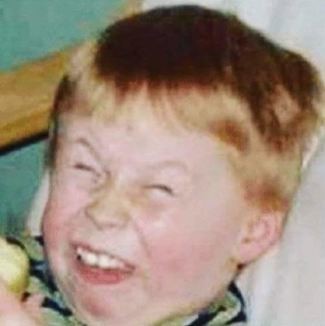
I try to make it a point to smile a lot and I think everyone should. Not in a “You’d be handsomer/ prettier if you smiled” type of way. Smiling just makes me feel good; it’s free and it’s a really easy way to spread a little joy around, which I think we all could use a little more of. Obviously there are situations and circumstances when smiling may be not a great idea or perhaps be inappropriate, but I think only good things can come from being bit more (responsibly) liberal with our smiling capabilities, even if that means just smiling to ourselves every now and then.

BONUS: Here’s a TED Talk about smiling

Emotional Objectivity

When people talk about being objective, it usual means sticking to the facts and disregarding emotion. For a long time I thought that “objective” was generally superior to “subjective.” This is something I talked about in a previous post but I want to expand on it a bit. The common definition of objective seems to de-value emotion. Emotion is often associated with immaturity and naivete, which I think is a disservice to emotion itself and ultimately to how people interact with each other.

Emotions are, in a sense, objective. Feelings exists whether or not their trigger is factual or fabricated, and they are connected to physiological phenomena. Culture or past experience has trained my brain to respond emotionally to this situation, and that is a fact. I cannot change my brain to immediately feel something different.

Today so many people, including myself, look to “objective,” evidence-based solutions to problems. We try to filter out emotion because it muddles up the “truth.” What I’m advocating for here is, rather that filtering out the feelings and the emotions, acknowledge them. Recognize your own emotions and the emotions of others because if we want to effectively communicate science and facts we first need to establish human connections. And those connections are made through feelings, not facts.

No Job I’m Too Good For

I’m convinced that there’s no job out there that I’m too good for or that I’m overqualified for. If I have the ability to perform a task that I am simply qualified to do it. Perhaps it does not utilize my entire skill-set, but that doesn’t mean that work is beneath me.

We should delegate work and specialize for the sake of efficiency and quality, not for status and prestige. If there is a something to be done and I’m capable and available, and no one more qualified than me is, I’ll do it.

When we start to believe we are too good for something, it can be easy to become jaded, ungrateful, and dissatisfied. Ultimately it comes down to attitude; I can either look at something as a chore or as an opportunity, and that’s completely up to me.

The What and the How

The what is the facts. What information do you have to offer. Hopefully its accurate and important.

The how is the delivery. How do you get your point across. Hopefully its effective.

Used to be obsessed exclusively with the what. Facts were the only thing that mattered. My perspective was the only logical one, and logic is indisputable!

But not everyone in the world grew up similarly to me. And even if they did that doesn’t mean anything. My siblings have different worldviews than me! Individuals’ lived experiences inform what is logical to them. And once I recognized that, I became less concerned with the what and more with the how.

I am by no means an expert on the how but I think recognition is a good first step, and I think I’m getting better.

And don’t get me wrong, the what is still super important. Having accurate and truthful facts is important, but at the end of the day will live in a world with humans, and those facts can be virtually meaningless unless you can convince the person sitting across from you that those facts are trustworthy and why those facts matter.

Indecision

I have a lot of drafts saved on this blog. Often times I’ll think of something and write it in here to save for later. Sometimes I do. Usually I don’t which is why there’s a huge backup. The reasons why I don’t finish or publish them varies. I may think it’s too personal, or too controversial, or not well written. Fretting over the choice of which one to post (which one is least risky [shame on me]) often leads to me not posting at all.

When I want or need to make a decision I try to give myself a clear cut reason. In this case, my reason is to just post something. Just do it. It doesn’t have to revolutionary or life-changing, it’s about the process and the practice.

The Likelihood Just Frightens Me

The likelihood just frightens me and it’s easier to hide.

Four Seasons, Rex Orange County

It’s funny how much possibility and mere ideas inhibit us. We are constantly weighing costs and benefits. People love buying lotto tickets because the worst that can happen is that they lost a couple bucks, and the best that can happen is they become an instant millionaire.

I think people like taking risks and doing new things, but only when the worst outcome is relatively harmless. Trying new foods/ restaurants, listening to new music, adopting a new hairstyle, etc. Yet even with stuff as innocuous as those, people can become uncomfortable deviating from the status quo.

But it’s not just the bad that often holds us back, the prospect of positive change can be scary too. What if I get this new job and I have to change my day-to-day routine? What if I actually like this girl? What if I decide I want to do this thing for the rest of my life? Walking out into the unknown is scary, but I think what might be scarier, or at least less exciting, is hiding right where you are.


Thoughts on “How are you?”

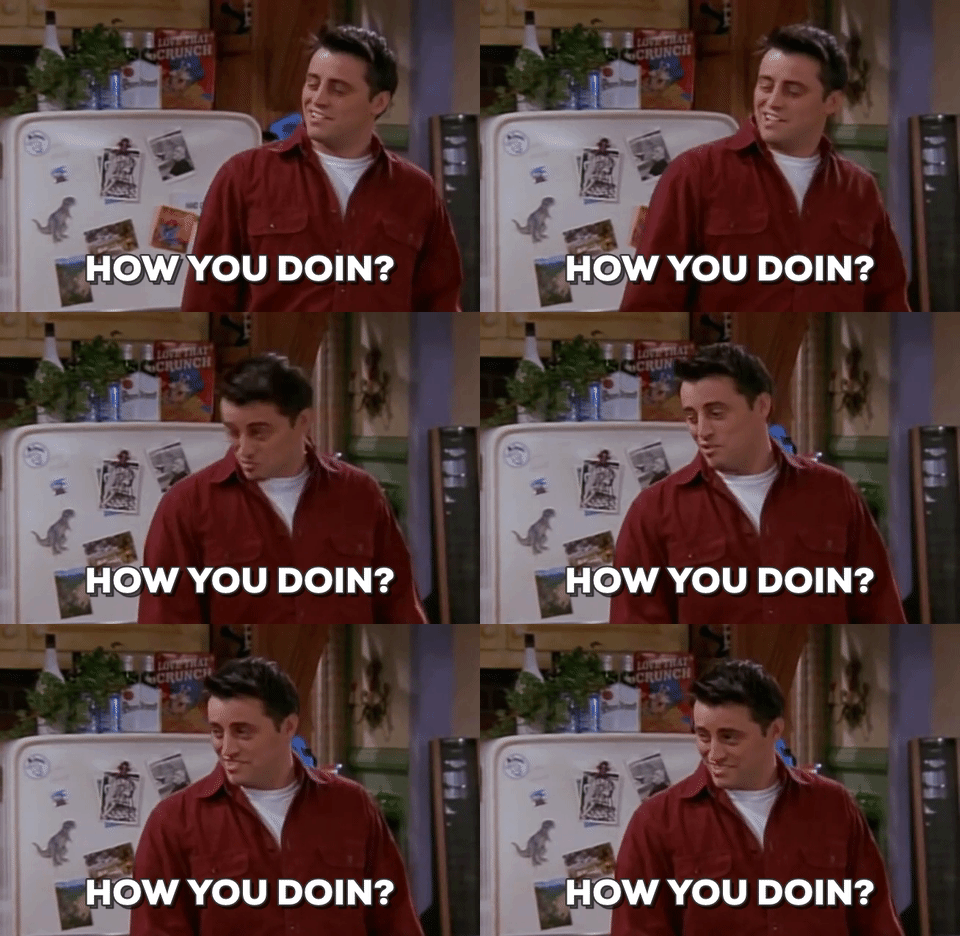
We use it everyday as a pretty standard greeting. If I ask, “How are you?” you say, “Good thanks. How are you?” then I say, “Doin’ well” then we continue a conversation or walk away from each other. Of course there are more and less awkward variations of this that we all have experienced, but the point is that “How are you” has become a transaction. I ask, you reciprocate, that’s the expectation, and if you don’t you’re rude. But if you respond with anything that deviates significantly from “I’m fine,” that’s too much information.

The things is “How are you?” can be a deeply personal question. Everyone has a mask they wear in public to hide whatever it is they are going through, or what they have been feeling, especially if things have not been going so well. By transactionizing “How are you?” we miss out on some really extraordinary opportunities to connect with people.

I’m not saying we shouldn’t ask “How are you?” anymore, I just think we should try to be a bit more intentional about it. It shouldn’t be thrown out there with the expectation of reciprocation. If you ask someone how they are doing, genuinely care about the answer and show them you care.