Family Medicine – Day 16

Slowwww day today. This morning I only saw 2 patients, plus a couple prenatal visits, a well-woman exam, and a cryotherapy visit. In the start of the afternoon I was was getting pinballed back-and-forth between clinic stations because nobody knew where I was supposed to be:

The doc I worked with that morning thought I was supposed to be with him in the afternoon (doc #1). The doc that I had on my schedule wasn’t expecting me (doc #2) and said I was with another doc (doc #3). I waited for doc #3 outside his office, but then one of the MAs came by and said he wouldn’t be there until the evening. So I went across the building to go talk to the office administrator and on the way ran into doc #1 and gave him a quick update. The admin said that based on the schedule I was with doc #2 as I thought, but she shot her a message just to verify it was ok. Once I got the ok, I headed back across the building and doc #1 reminded me that I should check with the admin about tomorrow because I was schedule with doc #4, but she was supposed to be on vacation, so I went back and then was told I would be reassigned to doc #3.

Anyways I finally had it all straightened out and when I got back to the side of the building I would be working that afternoon got sent straight to a patient’s room. An interesting case of refractory abdominal pain and chronic illness. Then after that silence. A whole slew of no shows (some of them shared a common factor which I thought was interesting and we could have a discussion about social determinants of health). Then a couple more folk at the end of the day. Such is the nature of primary care.
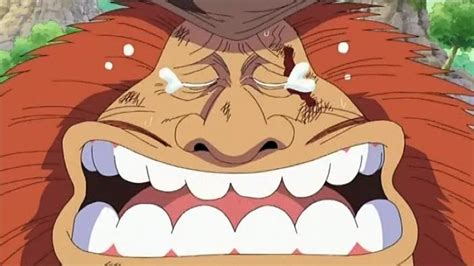
Dereshi

“That’s really a funny way to laugh.”

“Funny or not, ya know, when ya laugh you can be happy.”

“Why is that?”

“Why? When you’re happy, you laugh!
Which also means that if ya laugh you’ll be happy!
Even though you’re so small, you look like you’re suffering a lot.
Ya just need to laugh! When you’re sad, just laugh!”

“If I laugh when I’m in pain, I’ll look like an idiot!”

“That’s not true! See you can test it for yourself!”

Family Medicine – Day 15

My hands were full. An mL of Kenalog, a nearly empty vial of lidocaine, its fresh replacement, a 5 mL syringe and both a 18 and 22 gauge needle. I followed my attending around hoping that she would pick up on my hesitancy to do this injection and decide to hold me hand through the process. She told me I could draw up the medications in the office out of the sight of the patient because she “always feels awkward doing it in front of them,” while she went to quickly check up on another patient.

Ok that helped take some of the pressure off. I could have some space to breathe as I did this relatively simple task for the first time for a real patient. I couldn’t just pretend to draw up the lidocaine from an empty bottle and make highly inaccurate sound effects to emphasize that I was indeed drawing up imaginary liquids. I actually had to think about which needle to use when. When to clean what with the alcohol prep pads. And I had to get it right. After several pauses and second guesses, the injection was ready for the patient.

I went to find my attending and we went in to see the patient together. It was showtime. Project confidence. Don’t let them know this is your first time putting a needle in someone’s knee (ok not true, but at this point it was the first time I was choosing the spot and doing pretty much everything). Keep it smooth. Lucky for me, and probably for the patient’s peace-of-mind, she was Spanish-speaking so my attending did all the talking and my nerves wouldn’t be revealed by any shakiness in my voice. Just like we practiced. Mark the spot. Clean the site. Pokey poke. Pull. Push. Oops forgot to have a 4×4 and band-aid ready. Ask attending to open them for me. Pull. Hold. Cap. Band-Aid. It was done. Not sure what all the fuss was about. It was easy and the patient was so gracious about everything. When do I get to do a shoulder?

Family Medicine – Day 14

Today was pretty standard. Actually there was a lot cancellations this morning so the morning went by kinda slow. I’m definitely getting better at presenting my assessment and plan without disclaimers or questions and just going for it. Sometimes though I think about how this confidence is interpreted by my attendings. Do I look even dumber because I’m saying something wrong with confidence? Even if they know that I’m unsure despite the confidence I am trying to project and say it’s ok for me to be wrong, I can’t help but feel like deep down it influences their perception of me. Though I guess the obvious solution to this is not being wrong.

Family Medicine – Day 12

I did my first real injection today… kinda. This morning my attending for the day pulled me out of the room while I was with a patient and said that one of the attending I’ve worked with was ask if wanted to come to a knee injection with him. Of course I jumped at the opportunity. On the walk across the clinic I was getting a bit nervous trying to remember all the steps for cleaning the site, pulling up the medication, switching needles, and injecting. When we got to the patients room though, everything was pretty much prepped and my attending pulled up the meds. There was already an X on the injection site, despite me palpating the other side of the knee for practice. He handed me the syringe and I went for it. It was a little tougher to push the needle through than I was expecting, having only practiced on dummy knees and my only other experience with injections was intramuscular injections when I was giving COVID vaccines over a year ago. Both my attending and the patient said I did a good job though so I’ll take it, even if it honestly would’ve been pretty hard for me to mess up given that 95% of it was done for me. Nonetheless is was a good first experience and a good way for me to gain some confidence for if I ever have to do it for real (which I doubt will happen during this rotation, but ya never know).

After that it was a pretty standard morning, except I did have a well-child check which was some fun review. I got to use my dinosaur-in-the-ear play and even took it a step further and when I was leaving the room “pulled” a dinosaur sticker out of his ear.

In the afternoon I just had conference. We really need to change how we view effective and professional transfer of knowledge in higher education (and to perhaps education in general). I feel like there’s this view that in order for a presentation to be professional and effective, it need to be boring and lack spice. There needs to be a lot of words, and the presenter just needs to repeat everything on the slide verbatim. This goes against what I think many of us were taught about presentations, but it certainly doesn’t show. Though it also may be a product of limited time. Students and people who have other jobs or don’t work in education may not have the time to put together a presentation that is thoughtful prom both a content AND delivery perspective. The presentations from the interns and residents today were very thoughtful content-wise, but less so in terms of delivery and so some of the important content gets lost. Or maybe I just need to drink more coffee.

Family Medicine – Day 11

It was a long day today. There was a change in my schedule ’cause the doc I was supposed to work with actually didn’t have patients scheduled today, so I was reassigned. We ran pretty behind this afternoon, in large part because a lot of the patients just needed more time than the 15-30 mins (what’s new), but I think in some cases we got a little carried away with some of the conversations. They were mostly productive conversations, but also at times we had patients wait for almost an hour past their scheduled appointment for relatively simple follow-ups.

Idk, just something to be mindful of. No ones, fault necessarily, ultimately a systemic issues, but at the same time that is the reality we live in so we need to try our best to work within those parameters while fighting for change.

Family Medicine – Day 10

I’m actually a little surprised that I haven’t encountered more difficult patient encounters. Nearly all the patients have been pleasant, or at the very least neutral. Today I did have one encounter where the patient seemed to be kind of at their wit’s end for reason unbeknownst to me, but even so they was overall nice (perhaps a little passive aggressive).

I don’t expect this to necessarily be an indicator for the reality of primary care though (even if it generally is), but I kinda want some more experience working with difficult patients. I also want more practice with motivational interviewing. Opportunities have been there, but I just get caught up in going through motions and I forget. Also part of it is being cognizant of time, or lack thereof.

Then again, I have enough to worry about with trying to nail the simple more routine patient encounters.

Family Medicine – Day 9

Slowly I’m becoming more doctorly. I’ve been trying to be more consistent with providing my assessments and my plans more confidently, even if they are potentially wrong. Trying to avoid qualifiers. No “I’m not sure but…” or “This might not be right…” or “Not sure what you think but…” Just going for it. So far my preceptors have been very gracious in hearing me out, endorsing the good things I say, and suggesting adjustment or alternatives when necessary.

More and more I feel like I’m asking the right questions and I’m a little more focused in my histories and physicals. I’ve also been doing a little more reading of primary literature this week for various reasons, and while not all of it has been super relevant the present clinical practice, I’ve enjoyed reading the papers and it always feels good to learn new stuff (or at least feel like you are).

Family Medicine – Day 8

I can definitely see how easy it is to burn out in family medicine. Don’t get me wrong, I’m still enjoying it, but in the absence of good wellness practices it can definitely be a ticking time-bomb. More so today than any other so far, I saw the effects of the the short appointment slots. A lot of the patients we see can be complex and/or have a lot of problems to address, and the 15 mins that are scheduled simply are not enough. At the same time, we can’t just increase their scheduled time because other patients need to be seen. From the patient perspective it can appear like doctors are being dismissive of their problems or of their time which can hurt the relationship. From the doctor’s perspective, they would like to do more and to have all the time in the world, but it simply not possible, and there can be feelings of being under-appreciated. These feelings can lead to physicians be short or inpatient. Together these things can feed off each other, especially in the absence of empathy from either party (and actually likely applies to many healthcare professions).

To simply say doctors should develop better wellness practices though would be short-sighted. I think it’s an important part of the puzzle, but I think we need to also work towards systemic changes to improve patient care and physician wellbeing. Alright, give me some ideas…

Family Medicine – Day 7

Today went pretty well I think. Not perfect, but better than yesterday. I didn’t really end up writing things down, but I felt like my mind was a bit less foggy. There were a couple Spanish speaking patients that I saw today. It’s always hard to develop the same rapport that you can have with a patient with whom you share a common language. I try my best though. I look at the patient when speaking and not at the translator. I think I have a tendency to use less sympathizing or colorful or encouraging phrases when speaking through a translator, but I try. But also I think the translator feels a little awkward when they have to translate me saying things like, “I’m really happy to hear you are feeling better,” and will even sometimes paraphrase or just smile. That’s what I’m missing, and what I hope to gain by learning Spanish; being able to develop those connections without having to go through a filter. I can get by on certain parts of the interview and physical without a translator, but for a lot of the technical or more complicated stuff, I still need them.

Today we had a lecture related to end of life care. It was mostly centered around what to do when a patient request to continue palliative chemotherapy when it is determined that doing so would do more harm than good. The lecturer made a point that I thought was very important (well he made several, but to met this was the most impactful). When someone is in end-of-life care and the doctors have run out of curative treatments, we commonly hear in film, TV, other media, the phrase, “I’m so sorry, there’s nothing more we can do.” However, that is not true. There is always something we can do. It may not always be in the form of a pill or procedure, and it may not always extend a person’s life, but our role as physicians and healers should always to be to help our patients live their best lives based on their own values, regardless of the time they may have left. Sometimes that involves the stroke of a scalpel, other times words of reassurance or providing information. Sometimes it’s being present, other’s it’s giving space and being silent. There is always something we can do.